Kids these days have access to something previous generations absolutely did not: the ability to learn literally anything, from anywhere, at any time.
Want to pick up a new language? Done. Need extra help with school subjects? Easy. Curious about coding, music, or even how to draw manga? There’s a course for that.
But here’s where it gets a little overwhelming for parents. There are so many options out there that figuring out which ones are actually worth it, and which ones your kid will actually stick with, can feel like a full-time job. So let’s break it down.
The first thing to check before enrolling your child in anything is whether the class is live or pre-recorded. Both have their place, but they work very differently.
Pre-recorded courses are flexible and great for self-paced learning. Your child can pause, rewind, and go at their own speed. The downside is that there’s no one to ask questions to in real time, and for younger kids especially, that lack of interaction makes it really easy to zone out or just… stop showing up.
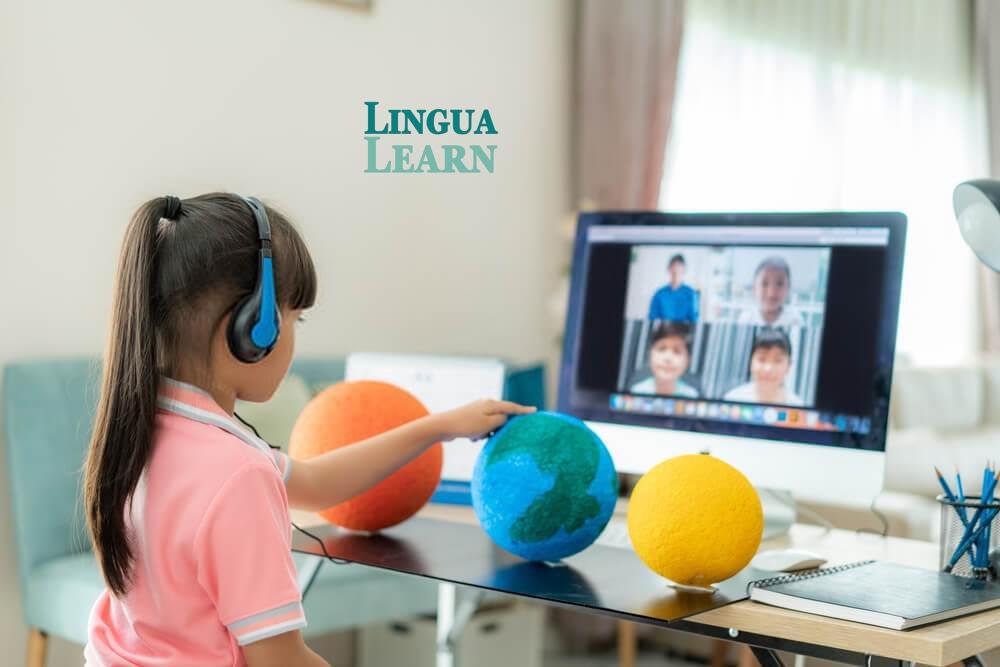
Live online classes are a different experience entirely. The instructor is there, the child can respond, ask questions, and actually interact with what’s being taught. Research consistently shows that kids stay more engaged and retain more when there’s a real person involved. If your goal is actual skill-building, not just content consumption, live classes are the better bet.
A class being “online” doesn’t automatically make it engaging. The best online courses for kids go beyond someone talking at a screen.
Look for things like games and quizzes built into the lessons, activities where the child has to produce something, small group settings where they interact with peers, and instructors who ask questions rather than just present information.
This matters especially for language learning. A child who sits through a 30-minute video about English vocabulary learns very differently from one who has to actually use that vocabulary in a live conversation with a teacher. The second kid is going to remember it.
A course designed for teenagers will lose a seven-year-old in the first five minutes, and honestly, the reverse is also true. Good online learning platforms categorise their content clearly by age group, and for good reason: the way an 8-year-old processes information is fundamentally different from how a 13-year-old does.
For younger kids, shorter sessions with lots of visual stimulation and game-like elements work best. Older kids can handle more structured content and benefit from having some autonomy in how they move through the material.
When you’re evaluating a course, make sure the format actually matches where your child is developmentally, not just the subject matter.
This is the same principle that applies to adult classes, just even more important for kids. In a group of 20 students, a child can easily disappear.
They might be daydreaming, distracted by a sibling, or just nodding along without actually engaging. A smaller group, anywhere from 4 to 8 students, means the instructor actually notices whether your child is following, can call on them, and can adjust the pace if something isn’t clicking.
One-on-one tutoring is even more personalised, and works really well for targeted skill-building, but it can feel intense for kids who learn better with a bit of social energy around them. The sweet spot for most kids is a small group where they feel seen but not put on the spot.
The platform is just the delivery mechanism. The instructor is what actually makes or breaks the experience. Look for someone who has experience working with children specifically, because teaching kids requires a completely different skill set than teaching adults.
Patience, the ability to adapt on the fly, and knowing how to keep energy up in a virtual environment are all things that not every qualified teacher has figured out for the online format.
If the platform offers a trial session, always take it. One class is enough to tell whether the instructor connects with your child and whether the format holds their attention.
Yes, online classes mean more screen time. That’s a fair concern. The difference between passive screen time and interactive, goal-oriented screen time is significant though. A child in a live language class is using their brain, responding, producing, and socially engaging. It’s categorically different from watching YouTube.
That said, session length still matters. For younger children, 30 to 45 minutes is plenty. Older kids can handle an hour. Anything beyond that and you’ll start to see the quality of engagement drop, regardless of how good the course is.
If you’re looking for one category of online course that consistently delivers long-term value for kids, language learning is it.
Children pick up languages faster than adults, and the earlier they start, the more natural bilingualism becomes. In Qatar’s international environment, adding Arabic, French, English, or Mandarin to a child’s skill set opens doors academically and socially for years to come.
At Lingua Learn Qatar, kids’ language courses are designed specifically for younger learners, with qualified instructors, small groups, and sessions built around keeping children genuinely engaged rather than just sitting through a lesson. If you’re looking for a starting point, that’s a great one.
 English
  Arabic